


CBHC understands that our state is facing a behavioral health workforce shortage and has for quite some time. Over the years, we have advocated for changes in the system to encourage individuals to enter this field.
Learn more about how CBHC is making lasting improvements to Colorado’s behavioral health workforce.
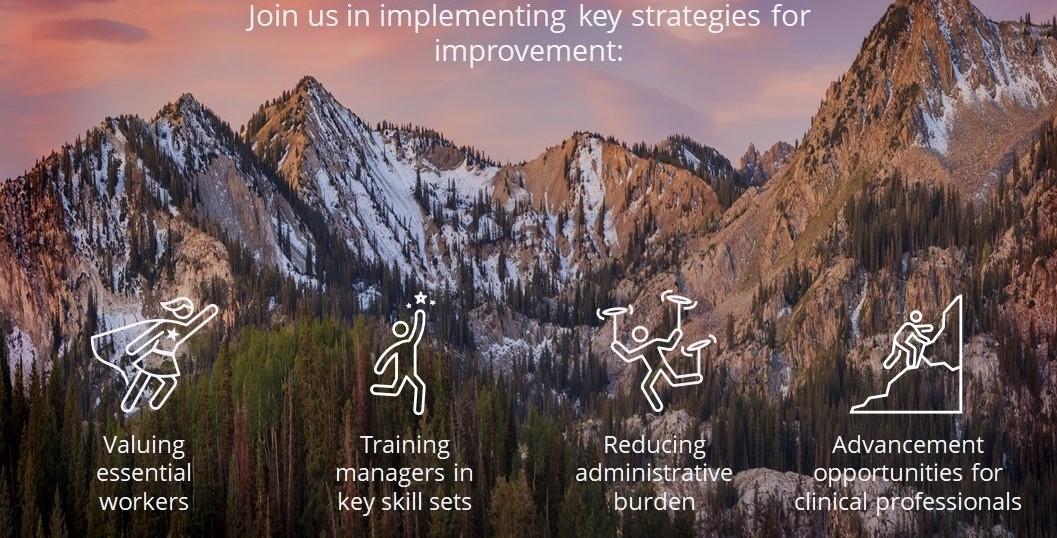
The following resources may be used to inform implementation and advocacy efforts while speaking with legislators and stakeholders.
Valuing Essential Workers
Essential workers have been delivering critical behavioral health care on the front lines throughout the COVID-19 pandemic, risking the safety and wellbeing of themselves and their families. They deserve fair compensation at the very least.
Training Managers in Key Skill Sets
Offering fully funded trainings to behavioral health managers across the state allows organizations to set standard practices around supervision, feedback, delegation, and other critical skills.
Reducing Administrative Burden
The responsibilities of documentation and constant updates to documentation processes and systems can create an undue burden for employees.
Advancement Opportunities
When clinicians are provided the opportunity to advance, they provide better services and affect positive transformational change to their organization and the behavioral health system at large.
Find Out More
As a trade association focused on education and advocacy, we are dedicated to our community and improving the the lives of .
Additional ResourcesMental Health Clinicians Expand Access and Improve Outcomes through Self-Help Web and Mobile Technologies
National Council for Behavioral Health Partners with myStrength Washington DC, Feb 4, 2013—The National Council for Behavioral…
President Recommends Mental Health First Aid as Part of Solution
A few hours ago, President Obama unveiled a plan for a mix of executive and legislative action designed to curb gun violence. A major component of the President’s plan calls for improving U.S. mental health services. CBHC is thrilled to note that one of the tools specifically listed in the President’s plan is Mental Health First Aid (MHFA).
Patrick Kennedy Calls for Mental Health Insurance Reforms in Colorado
By Michael Booth The Denver Post Colorado must reform laws and insurance benefits to give patients and…
Weld County’s North Range Behavioral Health Youth Team Recognized Internationally for Outstanding Service and Results
An intensive family- and community-based treatment program in Weld County for high-risk juveniles, Multisystemic Therapy (MST), has recently been recognized for outstanding service. Nominated for the annual “Whatever It Takes” award by the international MST Institute for its success with troubled youth, the North Range Behavioral Health MST program represents one of 500-plus programs in 34 states and 14 countries. David Bernstein, Director of The Center for Effective Interventions, who co-nominated the team for this award with their MST consultant Angelia Watson, says, “The North Range Behavioral Health MST Team consistently meets and then surpasses its goals; they are extraordinary professionals who passionately believe in MST and the importance of implementing the model with fidelity.”